
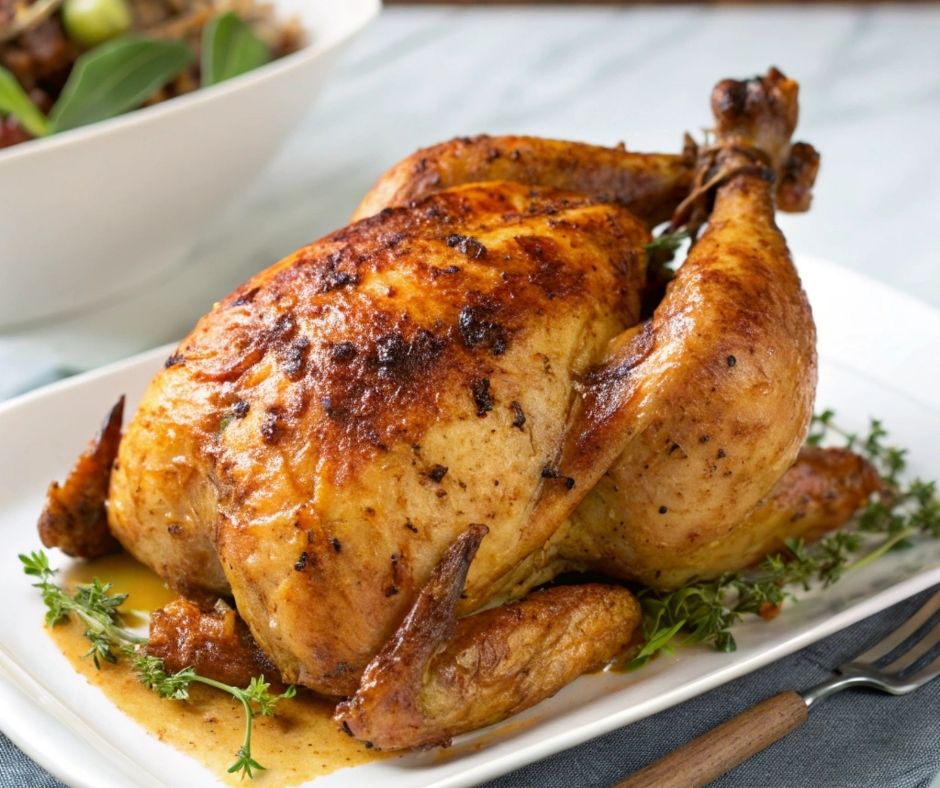
There’s a reason the best roast chickens you’ve ever eaten at a restaurant taste nothing like the ones you pull out of the oven at home. The chef’s secret isn’t a fancy marinade, a special oven, or years of culinary school. It’s salt! And more specifically, when and how they salt it.
Enter the dry brine. And the only salt worth doing it with.
Why Kosher Salt Changes Everything
Not all salt is created equal. Regular table salt is fine, dense, and heavily iodised, it draws moisture out fast, and that iodine can leave a faint metallic taste on delicate proteins. Fine sea salt is better, but the grain size still makes it easy to over-salt without realising.
Kosher salt: with its large, open flakes – is different. It dissolves slowly, drawing moisture to the surface and then reabsorbing it back into the meat, seasoning it from the inside out. The result is chicken that’s seasoned all the way through (not just on the skin), with a crisp, golden exterior and genuinely juicy flesh.
It’s the same reason professional chefs and butchers have used kosher salt for decades. And it’s why once you cook a dry-brined chicken, you’ll never go back.
The Perfect Dry-Brined Roast Chicken
Serves: 4
Prep time: 10 minutes + 24 hours resting (hands-off)
Cook time: 1 hour 15 minutes
What You’ll Need
- 1 whole free-range chicken (approx. 1.6–1.8kg)
- 1½ tsp Melach Kosher Salt flakes (the large flakes are ideal here – their size gives you more control)
- 1 tsp cracked black pepper
- 1 tsp smoked paprika
- Zest of 1 lemon
- 4 garlic cloves, skin on and lightly crushed
- A few sprigs of fresh thyme or rosemary
- 1 tbsp olive oil or softened butter (for finishing)
Method
The day before (5 minutes of work):
Pat your chicken completely dry with paper towel, this is non-negotiable! Any surface moisture will steam the skin instead of crisping it.
Mix the Melach Kosher Salt flakes, pepper, paprika, and lemon zest together in a small bowl. This is your dry brine.
Rub the mixture all over the chicken – under the skin over the breast if you can, on the outside, and inside the cavity. Don’t be shy, but trust the flake size: kosher salt is much less dense than table salt, so what looks like a lot is actually just right.
Place the chicken uncovered on a rack over a tray in the fridge. Leave it for at least 12 hours, ideally 24. This is where the magic happens – the salt slowly works its way in, and the skin dries out beautifully.
When you’re ready to cook:
Preheat your oven to 220°C (200°C fan-forced).
Pull the chicken from the fridge 30 minutes before cooking to take the chill off. Stuff the cavity loosely with the crushed garlic, thyme, and half the lemon (squeezed). Rub the skin with a little olive oil or softened butter.
Roast on a rack for 20 minutes at high heat to get the skin going, then reduce to 190°C and cook for a further 50–55 minutes, or until the juices run clear when you pierce the thigh.
Rest for at least 15 minutes before carving. Don’t skip this.
Why the Rest Matters
When you rest the chicken, those internal juices – drawn out by heat – redistribute back through the meat. Cut too early and they run all over the board. Rest it properly and every slice stays juicy. The salt you applied yesterday has been working this whole time toward exactly this moment.
A Note on Salt Substitutes
If you’ve ever searched for a kosher salt substitute because you couldn’t find it locally – that problem’s been solved. Melach Kosher Salt is now stocked in the salt aisle at Coles and Woolworths across Australia, as well as on Amazon. It’s Australian-owned, fully Vegan Verified, and non-GMO certified.
No substitutes needed!

